
Friday, April 3, 2015
Focus on Teaching Math—Not Money
It appears that classroom education in finance often doesn’t translate into real-world results.
For decades, studies have extolled the benefits of financial education, pointing out that students who take finance classes score well on tests of financial knowledge—and higher financial literacy leads to better financial behavior. Conclusions like these have led to a growing consensus that schools should teach children about managing their finances, with 43 states now mandating some kind of training.
So, if widespread financial education were really effective, why are so many young people struggling with debt, foreclosure and low asset accumulation? A group of researchers set out to find an answer. They looked at the states that mandated personal-finance curriculum in high school, and compared the financial health of students who graduated before the mandates to those who graduated after. Their hypothesis: If personal-finance education worked, the students who graduated after the programs were implemented would be better off financially.
They weren’t. After controlling for state, age, race, time and sex, and analyzing a huge pool of historical financial data, the group found that there was no statistically significant difference between people who graduated within a 15-year span either before or after the personal-finance programs were implemented. Graduates’ asset accumulation and credit management were the same, with or without mandated financial education.
But the study, currently under revision for publication, did find one school subject that does have an impact on students’ financial outcomes: math. Students required by states to take additional math courses practiced better credit management than other students, had a greater percentage of investment income as part of their total income, reported $3,000 higher home equity and were better able to avoid both home foreclosure and credit-card delinquency.
Without strong math skills, people tend to use more emotional ways to invest, spend or save their money. What’s more, people with less math experience make worse financial mistakes with issues like compounding or underestimating how quickly interest accumulates.
A as parent, perhaps encouraging your kids to take as much math as they can will be the best tool for helping them be more successful at managing their money over time.

Monday, March 23, 2015
Tell the Whole Story
There’s a consensus that financial education should begin at home. But the way many parents cover the topic at the kitchen table needs a serious upgrade. Even now, parents talk more about sex with their children than they do about money.
In a 2014 study of 136 children aged 8 to 17, researchers found that while children reported their parents shared information on general topics like saving, spending and earning, children said their parents tended to stay quiet on sensitive topics like the family’s specific income and family debt. Often, parents fear causing their children anxiety or think talking about money is impolite. The problem is, keeping these secrets often caused more anxiety than telling the truth.
Children with wealthy parents, for instance, sometimes assumed their parents didn’t talk about how much money they made because they were poor—but the real reason was that the parents didn’t want the children to brag.
And the negative effects of that childhood anxiety can last into adulthood. found that subjects who report limited communication with their parents about money later in life feel “clueless,” as if they don’t truly understand how credit cards or money management works.
Instead of concealing sensitive topics, you need to use financial discussions, no matter how sensitive, as “teachable moments.”
Trips to the store are good moments to have these conversations. Parents might explain why buying one item makes more sense from an economic perspective than another, comparing quality, price, benefits and the family’s general budget.
Wednesday, January 21, 2015
Don’t Make Money Scary
A group of Polish researchers came to similar conclusions about why people should speak frankly about money. Children, the researchers say, are quick to pick up on the symbolic value of money—all of the emotions it can stir and the associations it carries—even if they don’t understand how cash works. If parents don’t speak frankly about money, the researchers say, those associations pile up and lead children to act selfishly in the short term, and in the long term leave them with illusions about the power of money.
In their study, published in the Journal of Economic Psychology, the academics found that children who were focusing on money acted much more selfishly toward their peers. The researchers randomly divided 120 children aged between five and six into four groups. One group counted coins, one counted notes and the others various other objects. After doing so, the children were asked to help pick purple crayons out of a box of mixed-color crayons. The children who counted coins and notes were less willing to help with the task than those that had counted paper and buttons.
Over time, children who don’t get straight answers tend to think about money in purely symbolic terms, giving it more emotional weight than it deserves, he says. They may end up looking at the world through costs and benefits, rather than social rules of reciprocity. This can limit the ability to develop close relationships that would help people cope with problems in a way money cannot.
Further, if children continuously come to associate money with power, they might begin to see it as a solution to many problems, he says. They might come to see it as a way to cope with fears, attract new friends or increase their well being.
Thursday, December 11, 2014
When should you begin training your kids about money?
Training, in our view, should start when kids are young — by early elementary school age when money habits are already being formed.
We encourage parents to think of their kids childhood years as a money apprenticeship. From pre-school until high school graduation, with parental guidance, children have a chance to practice using money with little risk.
And with responsibility for making independent money decisions (with plenty of room for making mistakes), children can learn that money is just a tool — something to be understood, continually learned about and used wisely.
You do not have to be an expert to teach kids money skills and habits. Just start the dialog now! Making money visible in the household will go a long way to helping your kids build foundational skills and knowledge to be independent adults (someday)
Monday, September 8, 2014
Why do parents hesitate to teach their kids money skills?
Parents tell us they want their children to grow up with the skills to handle money wisely — yet they often do not feel comfortable teaching children to manage money.
Some parents feel they are not qualified, or that money is just not supposed to be discussed with kids. Other parents believe schools should be responsible for teaching kids about money. Others still tell us since they never had training and seem to be doing ok, so there is no need to teach their kids.
We recommend parents take the time to teach children about money regardless of their income, their current knowledge level or how they were raised in order to fulfill on their wishes to see their children build money skills that can serve them throughout life.
Tuesday, April 1, 2014
Where do young kids learn about money anyway?
Pretty much everywhere — and especially at home! Young children learn about money by what they see, hear and experience in the world around them. They primarily learn about money by watching their parents use and talk about it. They are also keenly aware of how their parents feel about money by watching facial expressions, listening to word choices and tone of voice.
If you think about it, money is part of most of our daily conversations. We consider what we need (or want), if we need (or want) it now, go through the process of buying it or deciding to do it another day, embrace or bemoan a prior choice, plan for tomorrow, etc. As a consequence of the ever-present money conversations happening at home, kids are exposed to the ongoing successes, struggles and the unending money decisions of every day life.
Friday, July 12, 2013
How Much Money Do You Make?
Love this question!
So for those who have not yet gotten this question, some things to ponder:
- Younger kids probably don’t know the difference between $1,000 and $100,000, so you may be able to settle the issue by letting them know that you make enough for them not to need to worry about running out of money.
- For older kids, try explaining what it costs to keep the household up and running, which will at least give them a baseline number (you can explain taxes later). That begins to teach them about budgeting.
- The old-fashioned among you will tell kids that it’s none of their business. I don’t buy that. Kids worry about money, and shooing them away and telling them not to worry about it probably won’t put them at ease.
- And you should be aware that a wily teenager may be able to look up your salary online if you work for the government, a labor union or a nonprofit group. Kids can also dig up mortgage information or estimates on what your house is worth.

How have you handled this question with your kids?
Wednesday, June 19, 2013
Broken Items – Accidents Do Happen

This week we got a great question from a reader: “What should we do if one of our kids breaks something?” We all know that with kids, things will get broken. It’s just a matter of time! So what is a parent to do? How should broken items be replaced, and who should pay for them?
It is possible, and valuable, to teach and inspire your kids to take responsibility when accidents happen. We’ve got some good ways for you to start the dialog before you are get into a meltdown over a broken item in a store — or at home.
When To Do
Some relaxed evening or a Saturday afternoon
What To Do
The key to this practice is advance preparation. Once you’re all prepared, you can use accidents as opportunities to (1) teach your kids that they can learn from and make amends for mistakes, (2) help them recognize the financial consequences of their actions, and (3) build their sense of personal responsibility.
Establishing the Family Rules
Each family should set up rules for broken items and who is responsible. Take time to think through the possibilities and get clear on your point of view — before something happens.
Here are some example rules:
Here are some example rules:
- In our home, if anyone accidentally breaks something that belongs to someone else, the right thing to do is to make amends by offering to fix or replace the item.
- In our home, we will work to help whoever accidentally breaks something to be able to help pay for a replacement item.
Practice/Dialog
Set up time to talk to your kids about accidents before they happen. To make it fun, consider playing the “What if?” game by asking your kids what they should do if they accidentally break something and how they’d do it.
Set up time to talk to your kids about accidents before they happen. To make it fun, consider playing the “What if?” game by asking your kids what they should do if they accidentally break something and how they’d do it.
- Pull together a number of items in your home ranging in value from very inexpensive to very expensive. For example:
- Milk glass
- Kitchen chair
- Front window (point it out, over there across the room)
- Music player
- Video game player
- TV
- Set the items on a table (if at all possible) for the review.
- See if the kids can guess their approximate cost — it’s OK to tell them if they are too young to know.
- “What if XXXX gets broken?” Discuss with them what they might pay for each of the items on the table, and how.
How Much to Pay?
- You can negotiate with your kids on how much money would be reasonable for them to contribute to buy a new item they have broken.
- For young kids, consider helping them to replace the item, so their fledgling efforts at money management are not overwhelmed by trying to replace costly items all by themselves.
- Depending on the item, that could mean having them pay a percentage of the cost of the item (for example, if the item cost $10, you could ask your kid to pay 20% or $2), or your kid could pay one flat rate regardless of the cost.
- Even paying a small portion of replacement cost can be a very valuable lesson for younger kids.
What You Will Need
- Items from around the home to practice “What if?”
- Websites or magazines to help kids determine the cost of items
- Patience
Talk About It
Do you kids think it is fair to have to pay for something they break? Do they know kids who already do this? Do they know other kids who do not have to — and if so, what do they think of those family rules? Does knowing they’ll need to pay something for broken items help to make them more careful?
Saturday, May 11, 2013
Clip and Earn

Wouldn’t life be grand if we could always get the best price for things we need (and the things we want)? Assuming unlimited time and energy, we probably could. Since that’s not very realistic, the next best thing we can do is to take advantage of the deals that are all around us.
Get your kids involved in locating the deals and along the way teach them an important money skill: how to be a wise consumer. We love wise consumers because they are good at finding the best value or can pick the best items for a certain price. Why overpay when you do not have to?
An easy way for kids to learn about relative value is to watch the ads and clip coupons, so money can be saved on items that would have been bought anyway at full price. Working with your kids to clip coupons also gives you the opportunity to include a family value lesson too. For example, how far in advance do you like to plan, and why is it important to plan? How important is it to keep things organized, so you can find them when you need them?
When To Try
After school, before dinner, Sunday morning
After school, before dinner, Sunday morning
What To Do
It is a good idea to have your grocery list handy for your kids to use when looking for coupons.
It is a good idea to have your grocery list handy for your kids to use when looking for coupons.
Finding, Clipping and Organizing the Coupons
- Show your kids how to find the coupons in the Sunday newspaper, or go online to find coupons for your favorite stores.
- If your community gets store coupons in the mail, have your kids collect, sort, and clip the important ones.
- Let your kids know what you consider good foods and goods that fit your rules for eating well in your home.
- Show them how to clip or print the coupons, organize, and store them in an envelope/folder/booklet.
- Help them learn ways to organize the coupons: expiration date, store, type of food, and/or amount of discount, whatever works best for you.
While at the Store
- Next time you go to the grocery store, put your kids in charge of collecting the items for which they have coupons.
- At the cashier, when you find out how much you’ve saved, give your kids that exact amount as reward for their good work.
- To give older kids an extra challenge, have them bring a calculator to the store. Give them the assignment of adding up the savings they expect. Check their total with the cashier’s figure. Did they get it right?
Coupon Tips
Here are some things we have learned over the years for getting the most from store coupons.
Here are some things we have learned over the years for getting the most from store coupons.
- Don’t be too tied to a particular brand: Try products for which you have coupons. You might be surprised to find new things you like.
- Get the Sunday paper at the store: If you buy the paper at a store, you can guarantee the weekly coupons will be inside. Most papers contain the circular coupons from P&G, Red Plum, and Smartsource.
- Figure out when the coupons are worth the most: Grocery stores tend not to put items on sale that are in a particular week’s coupon circular. So watch for them to appear on sale a few weeks out.
- Look on the Web: There are plenty of websites that let you know of upcoming deals, such as www.coupons.com and www.hip2save.com. Often they will also tell you which circular had the best coupon for items on sale.
- Shop the Sales: Find out when groceries go on sale in your favorite stores, usually Wednesday or Thursday, and plan to shop the first day of sale.
- Know your local store coupon policies: Find, print, and take them with you. For example, the first 10 coupons at one store are doubled up to a certain amount. The more you know, the farther the coupon value will go.
What You’ll Need
- Coupon inserts from local grocery stores, Sunday paper, web coupons
- Scissors
- Coupon carrier
- Shopping list
- Computer/printer
Talk About It
Were your kids able to find the items they had coupons for? What did they think of the amount of money saved? Did any of the coupons count for double or triple their face value?
Were your kids able to find the items they had coupons for? What did they think of the amount of money saved? Did any of the coupons count for double or triple their face value?
Monday, April 22, 2013
Birthday Party with Heart

One of our most cherished cultural traditions is to celebrate the date of a loved one’s birth with a party. For our kids, this tradition often begins when they are as young as 1 or 2. As parents, we want to see our kids honored in a way that is memorable and fun. Birthday parties are best known for fun themes; games; a cake with candles, a song, and a wish; and special playtime with classmates, close friends, and siblings.
And then there are the gifts. Typically, each party guest brings a gift for the birthday child, and often each leaves with a thank-you gift. The number of gifts trading hands in all the kids’ birthday parties across the country on any given weekend, let alone if we count the entire year, adds up to a number in the millions.
There’s an opportunity here, while kids are excitedly reveling in an abundance of fun, goodies, and new stuff, to appreciate how fortunate they are and to share a little with those who aren’t so fortunate.
When To Do It
The next birthday party you host for one of your children.
The next birthday party you host for one of your children.
What To Do
As you plan your kid’s birthday party, consider having guests bring a donation, to encourage kids to make part of the party experience an opportunity to share with others.
As you plan your kid’s birthday party, consider having guests bring a donation, to encourage kids to make part of the party experience an opportunity to share with others.
What to Donate: Cash or a Book
- Explain to your “birthday kid” that you’d like to include in the party a fun way to give something to those who have less.
- Decide whether you prefer that the donation be books or cash.
- If you choose a book donation:
- Let your kid know you would like to ask all the party guests to bring a book to donate.
- Pull out a number of your kids’ books. Talk about the books they have and about kids who may not have any books.
- Help your kid identify one book to give away at the party.
- Help your kid choose which organization should get the books. If necessary, you can suggest a doctor’s office, the hospital, an after-school program, or some other appropriate organization in your community.
- If you choose a cash donation:
- Talk to your kid about the idea of sharing part of their birthday abundance with kids who may not have very much.
- Let your kid know you would like to ask all the birthday party guests to bring a small cash donation — $1 to $5 — and that your kid gets to decide which organization will receive the money.
- Explain that your kid will still be receiving gifts, but they may be a little less lavish, because the guests will also be giving to the charity your kid chooses.
- Help your kid choose which organization should get the donation. You can suggest an animal shelter, children’s hospital, a food bank, or some other recognizable organization in your community.
- Have your kid decorate the donation box (for books) or jar (for cash), including putting the name of the organization on it.
- In your party invitations, include a request for each guest to bring a book (new or used) or a small cash donation, which will go the “xxx” charity your child has selected.
- Place the donation box or jar near the entry to the party so guests can easily deposit their donations as they arrive.
- Before the party ends, have your kid thanks guests and share where the donation will be going.
- Pick a day to deliver the donation with your kid; consider recording it on camera and revisiting that movie (or pictures) on future birthdays.
Now, let’s get this party started!
Things You Will Need
- Jar or box
- Pens, pencils
- Scissors
- Colored paper
- Tape or glue
Talk About It
After the party, when things have calmed down, ask your kid whether the donation idea worked. Did any of the friends who came ask why your kid was doing this? Is it possible that some of them may try this on their birthdays? After you have made the donation, ask whether your kid would be interested in doing it again on the next birthday.
After the party, when things have calmed down, ask your kid whether the donation idea worked. Did any of the friends who came ask why your kid was doing this? Is it possible that some of them may try this on their birthdays? After you have made the donation, ask whether your kid would be interested in doing it again on the next birthday.
Thursday, March 14, 2013
Tips on Tipping
What exactly is a tip? Who decided on the rules that go with how much and for what? Why are the rules different for each kind of service? And why do the rules for tipping vary by region, culture, and country?
As you might image, the ambiguous world of tipping is a bit perplexing to kids. Take tipping in a restaurant. Has you child ever gone back to the table to grab the change you left for the wait staff because they thought you forgot your money? How can you help your kids learn the general principles of tipping—and that tips need to be considered in the cost of certain activities such as eating in a restaurant?
When To Do
Dining out
Dining out
What To Do
Next time you get ready to pay the bill in a restaurant, get your kids involved in determining the tip.
Next time you get ready to pay the bill in a restaurant, get your kids involved in determining the tip.
If you have never involved them, start here
- Let your kids know that the people who have served your food earn a living (in part) from tips, the money that diners voluntarily give above the cost of the meal.
- Let your kids know that it’s normal to leave a certain amount, about 10-15% of the cost of the check; although, a person may choose to leave more or less, depending on their satisfaction with the service and personal preferences (or values).
When at the restaurant
- Teach your kids how you determine the tip amount.
- Share why you chose the amount you did.
- Make it very clear what your criteria is for the current tip’s calculation.
- Ask if they agree or disagree with your decision.
- Calculate the amount based on your decisions.
- Because young kids won’t be able to figure percentages in their heads, you may want to bring a calculator along for this purpose.
- Have your kids help you count out the tip money to leave on the table.
Things to try at home
- Put your kids in charge of rating service and calculating tips as part of their contribution to the family.
- You can also practice with your kids at home. Have them serve you a meal and present a bill, so you can calculate and give the tip. Or reverse the game to find out how your kids value your service!
What You Will Need
- Calculator
- Paper and pencil (to create “restaurant bill”)
Talk About It
Talk about other services that typically include a tip, for instance, room service in a hotel, or a haircut. Do you use the same percentage tip rule for these other services? Why or why not?
Talk about other services that typically include a tip, for instance, room service in a hotel, or a haircut. Do you use the same percentage tip rule for these other services? Why or why not?
Monday, February 11, 2013
Wish List

Have you ever dreamt of owning a really fast car – or taking a month-long vacation – or buying season tickets to the ballet? As adults, we have savings goals that often require some pretty big sums of money to fulfill our wishes. We have learned to save to buy a home, maybe start our own business, or be ready for a long retirement. It turns out that those who are successful in meeting financial goals are really good at saving money. And we’re willing to bet these folks got into the habit of saving money early on. Like, when they were kids!
So where do you begin with your kids? Unless they were born with frugal genes, they probably prefer spending money to saving it. Now, there’s nothing inherently wrong with wanting material things. Having a goal serves as incentive for achieving it. So let your kids dream of things they want, as long as they understand that it’s up to them to make it happen.
When To Do
Some evening after homework is done
What To Do
Your kids can learn to become more determined savers by having their own savings goals. The key is to set and reach short-term goals so your kids develop the savings habit.
- Compile a wish list – aka a set of savings goals – with a second column for costs. The wish list is just another way of writing down financial goals on paper.
- Help your kids write a list of the things they want, today. Tip: include some small, inexpensive items for early successes (see step 2).
- Help your kids rank their items in order of importance, from high to low.
- Help them come up with a ballpark cost for each item and write it in the cost column next to the item.
- Post the wish list on the fridge or some other very visible spot, so you and your kids stay focused on the goals.
- Chart a course to make those wishes come true – help your kids map out a plan to save up the money.
- Start with the least expensive goal on the list, because it will take the shortest amount of time to reach – ideally, just one or two weeks. Early success is key to starting the savings habit.
- If your kids get an allowance, determine how much of it you will let them use toward their savings goal – this will set the length of time to reach the goal. Optional: offer to match their savings to help shorten the time it takes to reach a goal.
- If your kids do not get an allowance, consider giving them a small amount of money each week, earmarked for helping them practice saving and reaching their goal. They need money in some form to practice building the saving habit.
- Have your kids track their progress on the wish list each week until they reach the goal.
- Once they reach the goal, take them shopping to get their wished-for item. And celebrate the accomplishment of reaching the goal!
- Set the next goal, and continue to support your kids as they reach more and more short-term savings goals.
- When you get home from buying the first item, or soon afterward, take out the list again and select the next goal to begin saving for.
- You know your kids best, so keep the length of savings time appropriate for their ability and patience. One- or two-week goals for a five-year-old may be just fine. This may be the right level for your kid for an entire year. Be patient; the rewards will outweigh any of the small frustrations of the early habit-setting period.
What You Will Need
Paper/pencil
Magazines for ideas
Calculator
Patience
Magazines for ideas
Calculator
Patience
Talk About It
Did your kids find it easy to come up with things they wanted? Did they find it hard to wait until they had enough money to go shopping for their coveted item? Did they think of other ways they could get more money, like doing extra work to help out around the house?
Thursday, January 3, 2013
Acts of Kindness
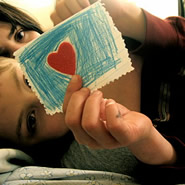
Valentine’s Day, February 14th, is a fun day for both young and old! More than just a day for romantic couples, it can be a day to celebrate friendship and kindness, and to show our appreciation for all who are dear to our hearts.
Because young kids are concrete thinkers, it can be hard for them to understand an abstract concept like kindness that can’t be represented by a physical object. However, by noticing when people around them give to others, offer their help, or take actions that make others feel comforted and loved, your kids can learn that "You are kind" means so much more than three words inscribed on a Valentine’s candy heart.
When To Do
Valentine’s Day, or any quiet afternoon
What To Do
Here are four kindness activities you can try with your kids this Valentine’s Day — or any other time during the year!
Here are four kindness activities you can try with your kids this Valentine’s Day — or any other time during the year!
- Card Kindness
- What would Valentine’s Day be without pretty cards? Help your kids make cards of Kindness for those they appreciate in their lives.
- Help them identify ways in which their friends or family members have been kind. If they have trouble coming up with examples, give them some hints. (Hint for parents: take a little time in advance to recall some of these acts of kindness, so you’re ready to jog your kids’ memories!)
- Once they have some ideas, help them make cards thanking these special people for the various acts of kindness.
- Help them decorate with red paper, doilies, and stickers, or glue on candy hearts.
- You can suggest they also describe the kind act in writing — people love knowing that their kindness was noticed and remembered.
- Special Gift Kindness
- As your own budget allows, give your kids a special gift budget to buy small Gifts of Kindness for a few of the kind people in their lives.
- Help your kids pick out items that mean something special to each of the people they have chosen. Suggest they remember gifts that they themselves have particularly enjoyed and treasured, and think about why they feel that way.
- If they have money left over, suggest they treat themselves to a Gift of Kindness — or save the money for something more special later!
- I Spied Kindness Box
- Decorate an empty box with fun heartfelt images. Close it and cut a slot in the top.
- For a one-month period, ask you kids to be on the lookout for acts of kindness.
- Have them describe each kindness on a sheet of paper (the youngest kids may need your help with this), and drop it into the I Spied Kindness box.
- At the end of the month, open the box and spend time reading aloud all the acts of kindness.
- Give your kids a Gift of Kindness for all their hard work of noticing when people do kind things to others.
- Kindness Jar
- Have your kids decorate a Kindness Jar to fill with spare change that your family will collect for a month. (Kids will love to watch the jar fill up day by day.)
- At the end of the month, help your kids sort the coins into coin roll wrappers and decide where they would like to donate the money.
- Take them to the chosen charity and let them hand over the contents of the Kindness Jar.
What You Will Need
- Colored paper, doilies, stickers
- Candy hearts
- Jar Box (a shoe box or candy box is a good size)
- Scissors
- Tape, glue
Talk About It
Was it hard for your kids to find people who were kind? How many people do they know who are kind? Did they find it fun to do the activity you choose? Do they think they are kind?
Monday, December 3, 2012
Holiday Budget Setting
The annual holiday shopping season is once again upon us. It seems to come around faster every year, doesn’t it? And this year it seems that most Americans are in no mood to overspend. Nearly two-thirds of consumers said the economy would affect their holidays, according to a National Retail Federation survey, with 84.2% of those respondents saying they would spend less.
 So how about your household? Do you have your holiday budget set? Will you approach holiday preparations, parties, and gifts differently than in past years? How are you going to involve your kids in this year’s holiday season? Do you have plans to teach them some new ways to enjoy gift giving and holiday celebrating without spending more than they meant to?
This holiday season find a way to engage your kids from the beginning. This is one of the best times of year to help your kids become great stewards of their money. Share your best budget strategies for having a happy, festive holiday season that won’t leave you with a January shortfall.
When To Do It
A quiet Saturday or Sunday afternoon
What To Do
Set your budget
- There’s no special or secret formula for how much you should spend on the holidays. You can use last year’s budget as a starting point. (If you didn’t have one last year, now’s your chance to create one!) If you’d like a new approach, consider basing the budget on some portion of your household income after taxes. Some experts suggest three days of income should be enough for one holiday season.
- Once you’ve set a budget, make a list of everything you plan to spend money on. Include gifts, travel, party costs, and decorations.
- Jot down the approximate cost of all the items on your list.
- Now the hard part: are your list and budget in sync? Can you afford the items on your list, given the budget you’ve set? Make any needed adjustments before you involve your kids.
Set the kids’ budgets
- Using your budget as a guide set aside the specific dollar amount you want each of your kids to manage this holiday season.
- Determine exactly which items each kid will be responsible for with his or her holiday money. For example: sibling gifts, parent gifts, school party gifts.
Help them plan gift purchases
- Let your kids know about their holiday budget(s) and what they will be responsible for this year.
- Help them think of a few gift ideas and jot down their approximate costs.
- You can take them online or to the store to check out prices.
- Discuss the option of making gifts vs. buying — remind them that even making gifts will involve some costs.
- Have them adjust or revise their shopping list based on the price check exercise and their decisions whether to make or buy each gift.
- A simple shopping list/worksheet can help them keep track of the gift items and costs at home. It’s also a handy tool to help them manage their budget while out shopping.
- Consider setting up an incentive plan to reward them for staying on budget or coming in under budget. You make these financial or fun activity rewards. For example:
- One free movie pass if they come in under budget
- $5 for every $5 they come in under budget
This is the time of year when retailers pull out all the stops to overcome your budget concerns. So be ready to cheer on your kids’ budget efforts as you all navigate this holiday season. Keep that list or worksheet in hand on shopping trips, whether to the shops or online. The whole family will find this really helps them to stay on top of spending — and makes it more fun learning along the way. Practice really does make perfect!
What You’ll Need
- Calculator
- Paper and pencil
- Computer with online access
- Time for price check store visits
Talk About It
What do your kids think about being responsible for their own holiday budget? Do they like the responsibilities? What surprised them the most in estimating costs for gifts and other expenses — and adding them up?
What do your kids think about being responsible for their own holiday budget? Do they like the responsibilities? What surprised them the most in estimating costs for gifts and other expenses — and adding them up?
Sunday, September 9, 2012
Follow The Money
 Parents tell us that it is not always easy to engage their
kids in conversations about money. Sometimes they just forget to explain a money
decision while out on a shopping trip. Either they don’t have time to explain, or
they just don’t want to engage their kids in a particular money decision
because they feel it would be too hard.
Parents tell us that it is not always easy to engage their
kids in conversations about money. Sometimes they just forget to explain a money
decision while out on a shopping trip. Either they don’t have time to explain, or
they just don’t want to engage their kids in a particular money decision
because they feel it would be too hard.
There’s an alternative and very effective way to
engage your kids in money conversations, one that feels more neutral and less
weighted with family baggage: reading books together. You can choose a comfortable
time for reading, when things are quiet and your kids are paying attention. Reading
together often leads to more in-depth discussion and exploration of money
topics.
One of our favorite books for fun, engaging money
conversation starters for young readers (age 4 through 8) is Follow the Money by
Loreen Leedy. The book follows a day in the life of a quarter, starting from being
stamped out at the U.S. Mint and making a full circle – being spent, lost,
donated, and many other adventures – all the way back to the bank the quarter started
out in after it was minted.
When
To Do It
Bedtime reading, Saturday or Sunday quiet time
What
To Do
Follow the Money
offers lots of money starter topics for you and your kids. You can choose one
subject as a jumping-off point or read the book from cover to cover. We
recommend that you read it through once, and then revisit the book when you
have a new need to explain a particular money topic, or if you encounter a real-life
lesson to be learned that could be supported by revisiting the book.
Quick Synopsis
The book creatively uses
money to indicate page numbers, and walks young readers through these money
basics:
·
Which presidents are on the coins and bills
·
How much money is in different rolls of coins
·
Understanding coupons and sales
·
How much you get back in change when you use
different currency to pay different prices (addition and subtraction)
·
Different ways you can use money
You’ll recognize a few of
the Money Wizdom budget basics:
·
Planning to save up enough for a toy
·
Spending money on treats for yourself (OK as
long as you have the money set aside)
·
Donating some of your money to those in need
What
You Will Need
Time(s) to read all or parts
Talk
About It
If you first read the book from start to finish, you
can ask your kids to tell you what they learned. Have them share their favorite
part of the book and why they liked it so much. You can also ask which was their
least favorite part and why.
Monday, August 6, 2012
Kick the Habit and Save!

If you stop to look at the numbers, you’ll see that some of your family’s daily indulgences can add up to big bucks. Perhaps it's grabbing bottled water or juice to throw into your kids’ lunch boxes each weekday, or frequent runs to the neighborhood coffee shop or workplace vending machine. Or those magazines that keep arriving in the mailbox, full of great ideas — but you never seem to have time to get to them.
What if your family gave up one or two of these habits and used the extra money to start a holiday fund? Along the way, your kids can practice trade-off decision-making — and more important, they get exposure to the costs of these little habits.
When to Do
Saturday or Sunday afternoon
What to Do
The key is to look at the little habits you and your kids indulge in, and then make some choices, so small conveniences don’t take such a big bite out of your family budget.
Track What You Do:
1. Record what you and your family eat,
drink, and do for two days in one week. Record everything!
2. We suggest one school day and one
weekend day so you can capture the biggest possible list of family
“indulgences.”
3. Have each of your kids keep track of
everything they eat, drink, and do for the days you’re tracking. It will be
helpful to give them a simple worksheet to fill in: Breakfast, Lunch, After School, Dinner, Sports,
Errands/Shopping Trips, and so on.
4. Be sure to include things like
magazines, newspapers, online games, and other small, recurring weekly or
monthly expenses you might be able to live without.
1. Gather everyone together and review
the information you’ve collected.
2. Put the possible “kick the habit”
items on a list. Estimate the cost of each of the items on a monthly basis.
3. Look at the top contenders and their
associated costs. See if you and the kids can agree on which item or items to
give up.
4. Once you pick an item or two,
calculate the savings you will add up between now and the middle of December. You
can use this money for a holiday gift fund!
5. Consider putting the money in a
labeled jar on the kitchen counter to remind the kids how their actions are
adding up!
6. Talk about how you all might spend
the money. Donate it? Share it? Buy a special gift for grandma or grandpa? A
gift for the whole family?
Paper, pencils/pens
Calculator
Were your kids surprised by how many little things you splurge
on each day and how much they cost? Was it hard to pick things to give up?
Would your kids be up for doing this once a quarter to see whether they can
find more habits to kick?
Wednesday, July 4, 2012
Help Detective

Many parents would say that kids today are self-centered,
overindulged, and not very interested in the world outside of themselves. We may
not realize it, but parents have been saying this for a very long time — at
least as far back as Greece's golden age, when Plato and Aristotle similarly lamented
the behavior of the youth of their age.
We can take comfort in the fact that our kids aren’t the
world’s first self-centered generation — and that they can learn to be more
thoughtful of others. Now, what part can we play in that learning process? Helping
others is more than an action; it calls for a caring attitude, an awareness of
need, and a willingness to serve others. These are all attributes that kids can
develop with a little guidance — and practice.
We have many chances to encourage our kids to help others.
Start when they're young: even preschoolers can be taught to offer toys to
other kids or to help pick up clutter around the house. Early training lays the
groundwork; as they get used to looking beyond themselves and caring about what’s
going on around them, they’ll come to enjoy taking an active role in doing good
things for others.
When to
do it
While grocery shopping or running errands or just out and
about
What to
do
The idea behind the Help Detective is to help kids notice
others in need and those who are helping them, and to begin to offer help themselves.
It is best played in short stretches and in many different situations, so you
expose your kids to the range of ways we all can help one another.
Some basic ground rules:
1. Players
get one point each time they see, and point out, someone doing something
helpful.
2. Rewards
are good motivators for beginning learners. When they accumulate a certain
amount of points — say, on a shopping trip — you can provide a small reward at
the end for noticing all the ways folks helped others that day. For example:
* You can
set a goal of 5 or 10 “Help Detective” points before your kids earn a reward.
*If you
are playing with several kids, you can set up a little competition and reward
the one with the most points (provide a handicap for the younger ones to level
out the playing field).
*You can
set up different reward levels for things kids point out than for things they actually
do for you or others.
3. If your
kids become overly enthusiastic and push the limits by offering to “help you” (just for the reward) too often, or
perhaps in ways that are not true to your values, take the opportunity to talk
about what it looks like to truly give help — no strings attached — and according
to your values.
Ideas to help your kids get started:
· Did you
see someone holding a door open for another person? That’s one point!
· Did you
spot someone retrieving an item from a high shelf for someone who can’t reach
it? Good for one point!
· Did you
see the grocery bagger help the women with her cart out to her car?
· Did you
see someone clean up a spill in the aisle?
· Did you
see someone pick up an empty paper cup and put it in the garbage bin?
· Kids can
also score points in the game by doing something helpful for you—such as
carrying a small bag of groceries—and pointing it out.
In addition to helping kids become more aware of
opportunities for helping others, this activity also encourages them to
practice those small kindnesses that enrich our lives every day — and to
experience the good feeling that brings, as well as the reward.
What you
will need
Notebook to keep track of “helper” points
Reward items
Talk
about it
After you complete a round of the Help Detective game, ask
you kids what they learned. Was it hard to find examples of people helping
others? Are there particular things they really like to do as a way to help
others? Are there things they do not like to do when being asked to help
others? Why?
Subscribe to:
Posts (Atom)

 Posts
Posts


